
Every child grows at their own pace, and many worries turn out to be nothing serious. But some signs are worth a specialist's look, especially when they appear together, get worse over time, or interfere with everyday life at home or in school. Below is a plain-language guide to what parents commonly notice, grouped the way our doctors think about them.
Seizures & spells
A first seizure at any age, with or without a fever
Jerky movements of the arms, legs or face that your child can't stop
Staring spells where your child seems to zone out for a few seconds and doesn't respond
Brief stiffening episodes or a sudden collapse
Repeated unusual movements at sleep onset or on waking
Development
Not sitting by 9 months, standing by 12 months or walking by 18 months
No clear words by 18 months or no short sentences by 2.5 years
Losing skills your child had already learned, such as words, waving or eye contact
Very poor balance, frequent unexplained falls or an unusual walking pattern
Persistently floppy or stiff muscles from infancy
Behaviour & learning
Trouble focusing, sitting still or following simple instructions well beyond peers
Delayed social skills, limited eye contact or repetitive routines that don't ease with age
Sudden change in personality, mood or school performance
Difficulty with reading, writing or maths that doesn't improve with regular help
Repeated tics, twitches or unusual habits that your child can't control
Head & pain
Headaches more than once a week, or getting steadily worse
Headaches that wake your child from sleep or are worst in the morning
Headaches with vomiting, blurred vision or unsteady walking
A head injury followed by drowsiness, confusion, repeated vomiting or a new headache
Fainting spells, dizziness or blackouts that don't have a clear cause
Muscle & movement
Difficulty climbing stairs, getting up from the floor or running like other children
Weakness on one side of the body, or a hand or foot that doesn't work as well
Very stiff or very floppy limbs, or a strong preference for one hand before 18 months
Numbness, tingling or pain that keeps returning
Involuntary movements, tremors or a head that tilts to one side
You don't need a referral. If any of these signs sound familiar, or if something just feels off with your child, a short consultation can help you understand what's going on and what, if anything, to do next.
Why early evaluation matters
The brain grows fastest in the first years of life, which is exactly when the right support makes the biggest difference. Getting an accurate answer early, whether that means reassurance, therapy, medication or simply a plan to watch and review, protects your child's development and saves families months of worry.
What to bring to the visit
A short written timeline of what you've noticed, any past prescriptions or reports, and if possible a short mobile video of any unusual episodes. Videos are one of the most useful things you can share with a neurologist.
From a first seizure to long-term developmental support, our child neurology team cares for the brain, spine, nerves and muscles.
Early detection with EEG monitoring and a personalised treatment plan to control and reduce seizures, so your child can get back to school, play and sleep with confidence.
Care for autism, ADHD and developmental delays, with practical guidance for parents and caregivers.
Management of muscular dystrophy and related conditions, with physiotherapy and team-based support.
Careful evaluation and treatment to reduce how often headaches happen, through medical care and simple lifestyle changes.
Long-term care that supports movement, posture and independence, coordinated with therapy.
Diagnosis and treatment of infections such as meningitis and encephalitis, plus metabolic and genetic conditions that affect the nervous system.
Knowing what happens next makes the day easier for you and your child.
Book online or call us. Bring any past reports, scans and videos of episodes if you have them.
The neurologist listens to your concerns, reviews your child's history and does a gentle examination.
If more information helps, we explain each test first, such as an EEG, MRI or developmental assessment.
You leave knowing the diagnosis or next step, the treatment plan, and when to follow up.
Every test is planned to be child-friendly and as stress-free as possible.
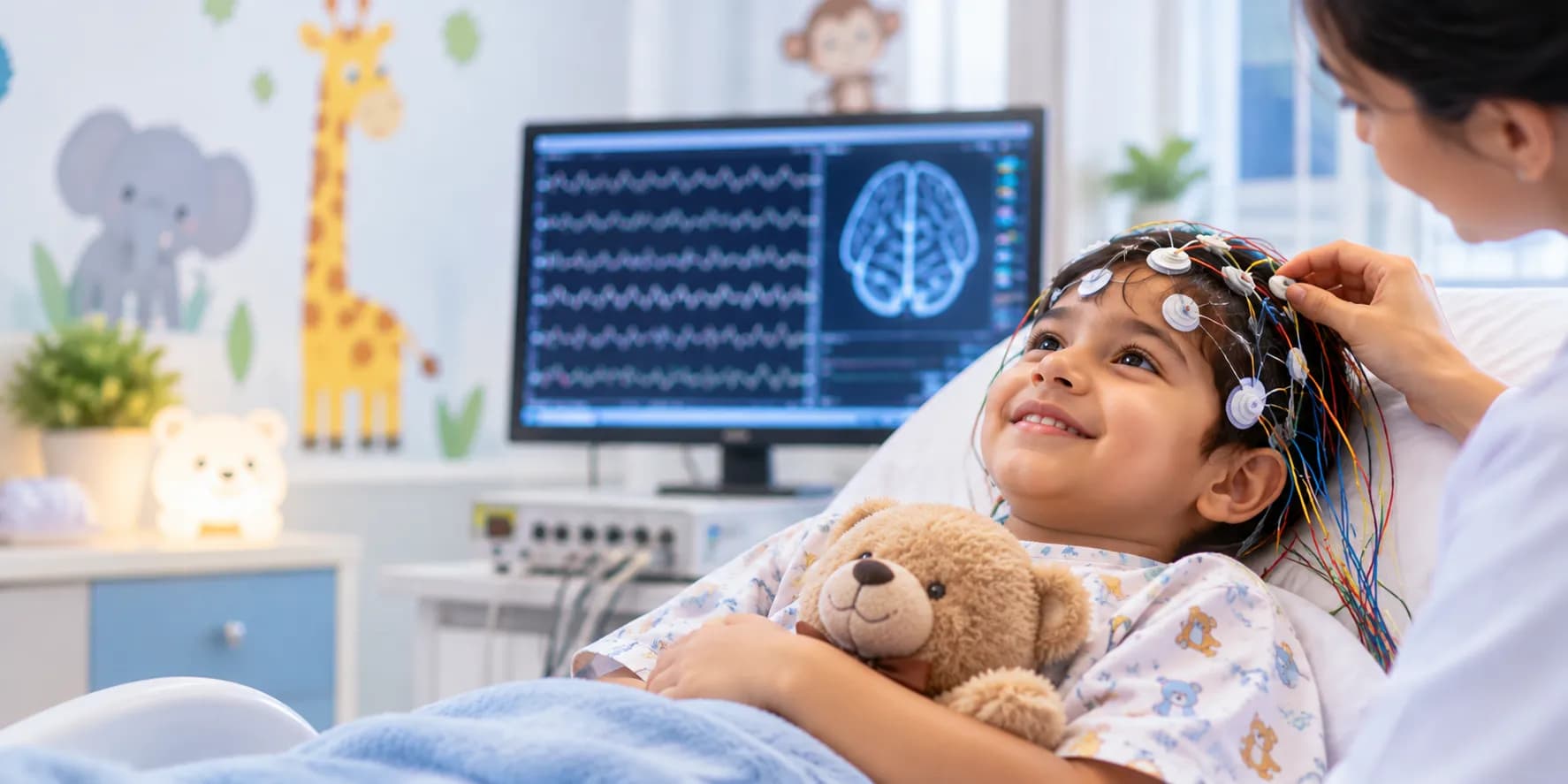
A painless recording of brain activity through small sensors on the scalp. Key for seizures and epilepsy.
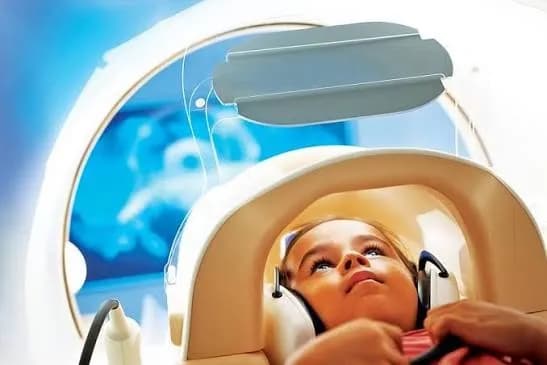
Detailed images of the brain and spine to find or rule out structural causes.
Play-based checks of speech, movement, learning and social skills against age milestones.
Blood and lab tests that help identify inherited or metabolic causes when needed.
Treatment is built around your child, and often combines more than one kind of care.
Our goal isn't only fewer symptoms. It's a child who can learn, play and grow with confidence, and parents who feel supported along the way.
A children's hospital first, so everything from the waiting room to the tests is designed with kids in mind.
Doctors who treat only children, and know how differently a growing brain behaves.
EEG, imaging and assessments to reach an accurate diagnosis sooner.
Calm, colourful spaces that help reduce anxiety for children and parents.
Doctors, therapists and counsellors working together on one plan.
Neurology care at Kalyan Nagar, RT Nagar, Malleswaram and New BEL Road.
We've compiled a list of the most frequently asked questions to help you find the information you need quickly and easily.
“If you can't find the answer to your question here, please don't hesitate to contact our support team for assistance.”
Consult a pediatric neurologist if your child has frequent seizures, developmental delays, persistent headaches, unusual muscle weakness, or concerns with behaviour and learning. Your pediatrician can also refer you.
Pediatric neurologists treat epilepsy, developmental and behavioural disorders such as autism and ADHD, neuromuscular disorders, cerebral palsy, migraines, infections like meningitis, and other rare neurological conditions.
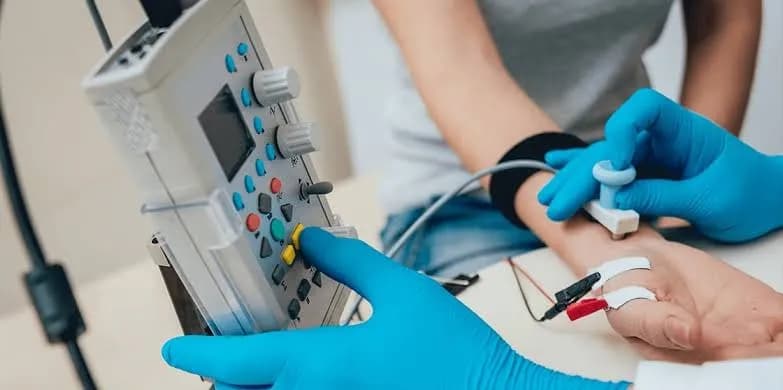
Diagnosis may include EEG, MRI or CT scans, developmental assessments, and genetic or metabolic testing, all planned to be as child-friendly and stress-free as possible.
No. An EEG is painless. Small sensors are placed on the scalp to record the brain's electrical activity, and nothing enters the body. Parents can usually stay with their child.
Treatments include medication management, neurorehabilitation, physiotherapy, speech and occupational therapy, behavioural counselling, and nutritional guidance to support overall development and well-being.